How Does a Propane Fire Pit Work?
A propane fire pit works by feeding gas from a tank through a hose and regulator into a burner, where a spark or match lights it and lava rock or logs spread the flames. The regulator controls the pressure, the valve controls the flame height, and the burner's holes shape a steady, even fire.
On this page (9 sections)
- What are the parts of a propane fire pit?
- How does the gas get from the tank to the flames?
- What happens when you turn it on?
- How does the regulator and valve control the flame?
- What do lava rocks and logs do in a propane fire pit?
- How much heat does a propane fire pit put out?
- Can you use a propane fire pit on a deck or patio?
- How do you run a propane fire pit safely?
- Which propane fire pit suits your setup?
A propane fire pit works by feeding gas from a tank through a hose and regulator into a burner, where a spark or match lights it and lava rock or logs spread the flames. The regulator controls the pressure, the valve controls the flame height, and the burner's holes shape a steady, even fire.
There's no wood, no ash, and very little smoke.
What are the parts of a propane fire pit?
Every propane fire pit has a tank connection, a hose and regulator, a control valve, a burner, and a bed of rock or logs. Each part does a specific job, and knowing them makes the whole system easier to understand.
The tank holds liquid propane under pressure. The hose carries gas to the pit, and the regulator drops that pressure to a steady level the burner can use.
The valve sets how much gas reaches the burner. The burner is a tube or ring with small holes that release gas evenly.
The rock or logs sit over the burner and break up the flame so it looks like a real fire.
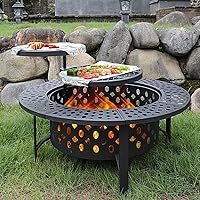
The Ciays 28-Inch Propane Table packages those parts into a table format. It's a 50,000 BTU steel unit with lava rock in the center and an external fire level control for adjusting the flame.
A lid covers the top when the party ends.
The flame you see isn't burning the rock. The rock just glows and spreads the fire above the burner.
How does the gas get from the tank to the flames?
Liquid propane turns to gas inside the tank, flows through the hose and regulator, and enters the burner where it mixes with air. The burner holes release that mix, and the ignition source lights it.
Propane leaves the tank as a gas at a fairly high pressure. The regulator's job is to bring that down to a safe, steady level so the burner gets a predictable flow.
From there, the gas travels down the hose to the valve. When you open the valve, gas moves into the burner tube and out through the holes.
Air mixes with the gas as it exits, and that mix is what burns.
This is why a proper connection matters. A loose fitting lets gas escape before it reaches the burner, which wastes fuel and creates a hazard.
Check the hose and regulator connections with soapy water before you light up. Bubbles mean a leak, so tighten or replace the fitting before going further.
What happens when you turn it on?
Turning on a propane fire pit is a short sequence: open the tank valve, turn the control knob to the start position, and push the igniter or hold a flame to the burner. The gas lights, and you adjust the knob to the height you want.
On a push-button model, you push and hold the ignition while the gas flows. Many units use a piezo igniter, which makes a spark when you press it.
The Flame King 24-Inch Smokeless Propane uses a self-igniting piezo system so you don't need matches.
If the pit doesn't light on the first try, turn the knob off and wait a few minutes before trying again. Gas can build up if you keep pushing without a flame.
Opening the tank valve slowly also helps, because a fast opening can trip a safety valve inside the tank.
Once it's lit, the flame should be mostly blue with some yellow tips. A very yellow, tall flame often means too much gas or a blocked burner hole.
Turn it down and check the burner if that happens.
How does the regulator and valve control the flame?
The regulator keeps the gas pressure steady, and the valve sets how much gas reaches the burner. Together they give you a stable flame you can raise or lower without the fire sputtering.
The regulator is the safety layer. It stops full tank pressure from hitting the burner and keeps the flow consistent as the tank empties.
That matters on a cold night, when propane pressure can drop. The valve is the control layer.
Turn it up and more gas flows, so the flame grows. Turn it down and the fire shrinks to a low glow.
On the Ciays table, the external fire level control lets you adjust the flame without reaching under the rock. The Flame King bowl uses a chrome valve knob for the same job.
A sticky or stiff valve is a sign to stop using the pit and have it checked. Don't force a knob that won't turn.
What do lava rocks and logs do in a propane fire pit?
Lava rock and logs sit over the burner to spread the flame, hide the hardware, and make the fire look natural. They don't fuel the fire; the propane does that.
Without media, a propane burner looks like a row of small blue jets. Adding rock or logs breaks up the gas flow so the flame dances and glows orange.
The rock also holds some heat and hides the burner and piping underneath. That's why most pits ship with lava rock in the box.
The American Fire Products Medium Lava Rock is 1/2 to 1 inch volcanic rock that works as a base filler or a primary media. It's heat-tested for high temperatures and can be used with propane or natural gas.
The brand recommends a layer at least 2 inches deep over the burner so gas filters evenly.
Keep the rock layer even. Piling it too high in one spot can smother part of the burner and push the flame to one side.
How much heat does a propane fire pit put out?
Heat output is measured in BTUs, and most patio propane fire pits run between about 40,000 and 60,000 BTU. Higher BTU means more warmth and a bigger flame, but also faster fuel use.
The Ciays table is rated at 50,000 BTU. The Flame King bowl puts out 58,000 BTU per hour.
That's enough to warm the people sitting around it on a cool evening, though it won't heat a whole yard. For a sense of what different ratings mean for your space, our fire pit BTU guide breaks down sizing by patio and group size.
Burn time follows from the rating. A 20 lb tank holds roughly 20 pounds of propane, and a pit burning near 50,000 BTU uses about a pound an hour at full flame.
Run it low and the same tank lasts longer. Keep a spare tank on hand for long evenings.
Heat also depends on the design. A table with rock in the center throws warmth outward, while an open bowl sends more of it straight up.
Can you use a propane fire pit on a deck or patio?
Yes, propane fire pits are a common choice for decks and patios because they make no embers or ash. That makes them cleaner and lower-risk than a wood pit in many settings.
Still, there are rules to follow. Set the pit on a level, non-flammable surface.
Keep the tank upright and away from the heat. Follow the maker's clearance distances for walls, railings, and overhead structures.
Some decks and HOAs have their own limits on open flame, so check before you buy.
The Flame King bowl is a portable option you can move from the patio to the campsite. It measures 24 x 24 x 12 inches and weighs about 27 pounds, and it comes with a cover and carry straps.
A stabilizer ring holds the tank in place during use.
If you plan to take yours on the road, our guide to the portable propane fire pit for RV camping covers what to look for in a travel-friendly unit.
How do you run a propane fire pit safely?
Safety comes down to a few habits: check for leaks, keep the tank upright, never leave it unattended, and shut off the gas when you're done. Those steps prevent most problems.
Before each use, do a soapy water check on the hose and regulator connections. Open the tank valve slowly.
Light the burner with the lid or cover off, and keep your face and hands clear of the burner when you spark it. Once it's running, watch it; don't walk away and leave it burning.
When you're finished, turn off the valve at the tank first, then the control knob. Let the unit cool completely before putting the lid back on.
Our roundup of the best fire pit with lid options shows how different covers and lids handle weather and storage. Store spare tanks outdoors, upright, and away from heat.
Never store a tank indoors or in a hot garage.
Which propane fire pit suits your setup?
A table model suits a patio where you want a surface for drinks and a centerpiece for guests. The Ciays 28-Inch Propane Table gives you a 28-inch square top, a 50,000 BTU burner, lava rock, and a lid, so it works as furniture and as a fire.
A portable bowl suits people who want to move the fire around or take it camping. The Flame King 24-Inch Smokeless Propane is light enough to carry and comes with straps and a cover.
Its 58,000 BTU burner runs hot for its size.
For anyone comparing fixed models for a backyard, our roundup of the best gas fire pits puts the top patio options side by side. A bag of lava rock rounds out either setup if you want a fuller, more natural-looking fire bed.
So how does a propane fire pit work in practice? Gas leaves the tank, the regulator steadies it, the valve sets the flow, and the burner lights it.
Pick a table model for a patio centerpiece or a portable bowl for travel, and the same simple system does the rest.
Frequently asked questions
Do propane fire pits give off smoke?
No, propane burns cleanly, so a fire pit running on it gives off little to no smoke. You may see a brief puff when it first lights or when wind pushes the flame.
There are no ashes to clean up afterward.
How long does a 20 lb propane tank last in a fire pit?
It depends on the burn rate. A 50,000 BTU fire pit running at full power uses roughly a pound of propane an hour, so a 20 lb tank gives you about 20 hours.
A 58,000 BTU pit will run a bit shorter at full flame.
Why won't my propane fire pit light?
The most common causes are a closed tank valve, a tank that is nearly empty, or air in the line after a fresh connection. Open the valve slowly and try again.
If it still won't light, turn everything off and check the hose for leaks with soapy water.
Is it safe to leave a propane fire pit burning?
Don't leave it running without someone watching it. Shut the gas off at the tank when you go inside or turn in for the night.
Give the unit time to cool before you put the lid on.