Are Propane Fire Pits Safe?
Yes, propane fire pits are safe when used as directed, because the fuel burns cleanly and the flame stays inside the bowl. Most problems come from poor placement, a leaking connection or a tank stored too close to the heat.
On this page (10 sections)
- What makes a propane fire pit safe to begin with?
- Where should you put a propane fire pit?
- How much clearance do you need around the flame?
- Is it safe to use a propane fire pit on a deck?
- What are the real risks with a propane fire pit?
- How do you light and run it without trouble?
- What safety gear is worth keeping nearby?
- Is a propane fire pit safe during a burn ban?
- Are propane fire pits safe around kids and pets?
- What's the verdict on propane fire pit safety?
Yes, propane fire pits are safe when you set them up and run them the way the maker intends. The fuel burns cleanly, there's no ash or flying sparks, and the flame stays inside the bowl.
Almost every problem traces back to placement, a loose connection or a tank sitting too close to the heat. Get those right and a propane fire pit is one of the lower-risk ways to have a fire on a patio or deck.
What makes a propane fire pit safe to begin with?
A propane fire pit is safe because the gas burns in a controlled burner under a bed of lava rock or media. The flame never touches loose fuel, so there's nothing to spark or send embers into the yard.
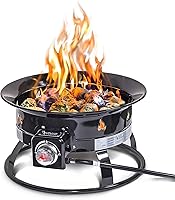
The Outland Living Portable Propane Fire Pit shows how the design works. Its stainless steel burner sits inside a steel bowl, and a 4.4 lb lava rock set spreads the flame into a cozy glow.
A pre-attached 10 ft hose keeps a standard 20 lb tank well away from the fire.
Outland Living says the unit is CSA approved. That matters for safety: an accredited certification means the burner, hose and regulator passed independent testing.
It's also why many campgrounds allow a certified fire bowl during a fire ban.
The 58,000 BTU output is a lot of heat for a 19-inch bowl. More heat means shorter clearances matter more, so follow the maker's spacing rather than guessing.
Where should you put a propane fire pit?
Put a propane fire pit outdoors, on a level, non-flammable surface, with the clearances the maker states. Open air is the first rule, and flat ground is the second.
That means a patio, gravel pad or concrete slab rather than grass or a soft lawn. A slight slope can tip a bowl or pull on the hose, and a wobbly unit is a hazard once the flame is lit.
Keep it away from walls, fences, overhangs and low tree branches. Heat rises and radiates sideways, so a covered porch or a garage corner traps both heat and fumes.
Never run one indoors, in a tent, or in a screened room. Even a breezy space with one open side can collect carbon monoxide.
How much clearance do you need around the flame?
Leave at least 3 ft of clear space on all sides as a working baseline, and more on the side facing the tank and hose. Check the maker's stated clearance first, since it overrides any general figure.
That gap gives you room to move around the unit and keeps chairs, cushions and rugs away from radiant heat. Fabric near a hot bowl can scorch long before it looks like it's close enough to burn.
Watch the space above too. A patio cover, pergola or awning can trap heat and smoke under it.
If the flame is under a roof, move the unit out into the open.
Kids and pets need the same buffer. A fire bowl at 11 in tall is right at a small child's eye level, so set the unit where it's not in a walkway.
Is it safe to use a propane fire pit on a deck?
Yes, with two precautions: a heat-resistant mat under the bowl and the maker's clearances to the railing and house. Composite decking and painted wood are the surfaces most likely to show heat damage.
Radiant heat is the concern rather than direct flame. A fire bowl running at 58,000 BTU warms the deck under and around it, and repeated sessions can discolor a composite board or dry out a wood plank.
The DocSafe 48" Round Fire Pit Mat gives you a physical barrier. It's four layers of silicone-coated fiberglass that DocSafe rates to 2000°F and tested to the UL94 V-0/5VA flame standard.
It's also waterproof and oil-proof, so drips wipe off.
For very hot fire pits, DocSafe advises keeping the heat source about 12 in from the mat. That's a sensible buffer for a high-output bowl, so treat the mat as extra protection rather than a license to skip clearances.
Measure your bowl first. The mat is 48 in across and 1.5 lb, so it stores easily but still needs a flat spot to lie flat.
What are the real risks with a propane fire pit?
The genuine risks are gas leaks, carbon monoxide and contact burns, not the flame leaping out of the bowl. Each one has a simple check you can do before and during use.
A leak usually comes from a loose hose fitting or a worn O-ring at the regulator. Gas pooling near the burner can ignite suddenly when you light it.
The fix is a soapy-water test on every connection before the first light of the season.
Carbon monoxide is invisible and odorless. Propane burns cleanly, but incomplete combustion in a sheltered spot still produces it.
Outdoors in open air, fumes disperse. Indoors or under a low cover, they build up.
Contact burns are the everyday risk. The bowl, the rock media and the valve knob all get hot.
Give the unit time to cool after you shut it off before moving it or putting a cover on.
How do you light and run it without trouble?
Open the lid or clear the top, turn the gas on at the tank, then light the burner from the side. Follow the maker's lighting order, and keep your face and hands away from the burner while you do it.
The Outland unit uses a manual ignition, so you'll light it with a long match or a lighter wand. A long lighter keeps your hand well back from the rock bed.
If the burner doesn't catch within a few seconds, shut the gas off and let the area clear before trying again. Gas that builds up unburned is what makes a delayed light dangerous.
Turn the chrome valve knob to set the flame height. Start low and raise it once the unit is running smoothly.
A flame that pops, roars or burns unevenly calls for a shutdown and a check of the connections.
Close the tank valve whenever you step away, and turn the burner knob off first. Doing it in that order keeps gas from sitting in the hose.
What safety gear is worth keeping nearby?
A fire extinguisher within reach is the single most useful item, along with a lid or cover for smothering a small flare-up. Both cost little and take seconds to use.
The Kidde Basic 110 is rated 1-A:10-B:C, so it handles wood and paper fires as well as the liquid and gas fires a propane unit could produce. It weighs 2.5 lb and comes with a mounting bracket, so it can hang on a nearby wall.
The all-metal body and easy-to-pull pin make it simple to grab under stress. Check the pressure gauge now and then: if the needle sits in the green, it's charged.
It's a single-use residential unit, so replace it if you ever discharge it.
A fire pit with a lid does the same job for small flames and also keeps rain and debris out of the bowl. Our guide to the best fire pit with lid covers models that ship with one.
The Outland kit includes a cover and carry kit, with an optional carry bag sold separately.
Is a propane fire pit safe during a burn ban?
Many propane fire pits are allowed during a burn ban, because they produce no embers and no open sparks. That's why certified gas bowls are popular with campers in dry regions.
The certification is the key. Outland Living says the Firebowl Deluxe is CSA approved and safe to use during most campfire bans.
That approval means the design met independent safety standards for the burner and fuel system.
The final word still rests with your local fire authority. Rules change with the weather, so check the current restrictions before you light up, even if your model is certified.
A gas fire pit isn't risk-free in extreme fire weather either. If the area is under a full fire ban with no exceptions, respect it.
No fire pit is worth a wildfire.
Are propane fire pits safe around kids and pets?
A propane fire pit is as safe around kids and pets as you make it. Keep the unit fenced or set back, teach children the bowl is hot, and never leave it running unattended.
The bowl and lava rocks get hot even when the flame is low, which is the trap. A child can reach for the lava rocks before you notice.
Place the unit where a fall can't happen and where the hose isn't a trip wire.
Pets are usually the bigger risk around open flames, so keep dogs on a lead near a lit unit. A curious nose near a 19-inch bowl is close enough to get singed.
When you finish for the night, shut the gas off and let the bowl cool completely before covering it. That last step matters most: a cover over a warm unit traps heat and can scorch the fabric.
What's the verdict on propane fire pit safety?
Propane fire pits are safe when you treat them like any other outdoor fire. Set the unit on a non-flammable surface, keep clear space around it, test the connections and never run it indoors.
Those four habits prevent nearly every serious incident.
If you want a portable, certified gas bowl for a deck or campsite, the Outland Living Portable Propane Fire Pit is the practical pick. Add a fireproof mat under the bowl on wood or composite, and keep an extinguisher within reach.
For more on choosing and running one, see our gas fire pit roundup and the fire pit BTU guide. If you're still weighing how the burner and tank connect, our explainer on how does a propane fire pit work walks through it.
Pick a certified unit, follow the clearances, and you can enjoy the flame without the worry.
Frequently asked questions
Do propane fire pits give off carbon monoxide?
Yes. Propane burns cleanly, but any fuel-burning appliance still makes carbon monoxide, so only run one outdoors in open air.
Never use a propane fire pit in a garage, tent or screened room, even with the door open.
Can a propane fire pit explode?
A properly connected tank and regulator don't explode in normal use. The real danger is a gas leak pooling near the burner or a tank heated by the bowl, so check connections with soapy water and keep the cylinder well away from the flame.
Should you shut off the propane at the tank after every use?
Yes. Turn the burner knob off first, then close the valve on the tank, so no gas sits in the hose.
Do this even for a short pause, and let the unit cool fully before you cover it.