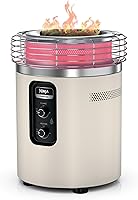
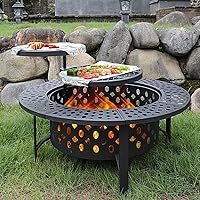
Do Propane Fire Pits Provide Heat?
Yes, propane fire pits provide real heat. Most portable models put out 50,000 to 60,000 BTU and table models about 60,000, enough to warm the people sitting around them on a cool evening.
On this page (8 sections)
- How much heat does a propane fire pit actually give off?
- Why does BTU rating matter more than flame size?
- What changes how warm a propane fire pit feels?
- Are portable and table propane fire pits both warm?
- How do you get the most heat from a propane fire pit?
- How long will a tank keep the heat going?
- Are propane fire pits safe to use for warmth?
- The short answer on propane fire pit heat
Yes, propane fire pits provide heat. Most portable models put out 50,000 to 60,000 BTU, and that's enough to warm the people sitting around them on a cool evening.
The flame also gives you something a patio heater can't: a real fire to watch. Below, we break down how much heat you get, what changes it, and which pits deliver the most warmth for the money.
How much heat does a propane fire pit actually give off?
A typical propane fire pit produces 50,000 to 60,000 BTU per hour, which is genuine warmth within a few feet of the flames. For comparison, a small patio heater runs around 40,000 to 48,000 BTU, so a good propane pit is in the same league.
The heat you feel comes in two forms. The flame gives off radiant heat that warms faces and hands directly.
The hot burner and lava rocks or glass stones also warm the air around the bowl, which then drifts toward your seating.
What you won't get is whole-patio heating. A propane fire pit is a spot heater: sit close and you'll be comfortable, step back six or eight feet on a cold night and the effect fades fast.
How many BTUs you need for your space is covered in our fire pit BTU guide.
Why does BTU rating matter more than flame size?
BTU is the measure of heat output, and flame height is mostly a visual choice. A pit rated at 58,000 BTU puts out that much heat at full valve, no matter how tall the flame looks.
Turning the control knob down shortens the flame and cuts both fuel use and heat. That's useful when a mild evening calls for ambiance rather than warmth.
Cranking the valve wide open gives you maximum output and burns through propane faster.
So when you compare models, read the BTU figure rather than judging by photos. A wide, low flame on a high-output burner often warms better than a tall, narrow one on a weaker burner.
What changes how warm a propane fire pit feels?
Wind, seating distance and flame setting decide how much of that BTU reaches you. The rated output is a constant, but the felt warmth is not.
- Wind: a breeze strips heat away from the flame and pushes it sideways. A fire pit with lid or a wind guard helps shield the burner and keeps the flame steady.
- Distance: heat falls off quickly with distance. A 58,000 BTU pit feels strong at 2 feet and mild at 6 feet.
- Setting: the adjustable regulator or valve lets you trade flame height for burn time.
- Fuel supply: a partly empty tank and cold weather both lower pressure, so the flame runs smaller and gives less heat.
- Surroundings: sitting with a wall or windbreak behind you blocks the breeze and makes the fire feel warmer.
If your patio is exposed and breezy, expect to sit closer or turn the flame up. On a still night, the same pit feels noticeably warmer.
Are portable and table propane fire pits both warm?
Yes, both types give useful heat, and the difference is seating style more than raw output. Portable bowls are round, low and easy to move, so you pull chairs around them in a circle.
Table models raise the flame to about table height and give you a surface for drinks and plates.
A portable bowl like the Outland Living puts out 58,000 BTU in a 19-inch steel fire bowl. That's a lot of heat from a small footprint, which is why these pits work well for camping and tailgates as well as backyards.
A table model like the Ciays 43-inch runs 60,000 BTU through a 304 stainless steel H-burner. The denser flame pattern spreads warmth across the table edge, so guests sitting at the table feel it on their hands and faces.
Neither type heats a whole yard. Pick the shape that matches how you sit: a circle of chairs around a bowl, or people gathered at a table.
How do you get the most heat from a propane fire pit?
Site it out of the wind, sit close, and open the valve to full only when you need it. A few small choices make a real difference in how warm the pit feels.
Place the pit on a level, non-flammable surface and keep it away from walls and overhangs. Angle seating so backs are to the prevailing wind and the flame faces the group.
Use lava rocks or glass stones as designed; they hold and radiate heat and make the flame look fuller. Let the burner run for a few minutes before judging the warmth, since the rocks take time to heat.
Keep the tank out of sight but connected with its full hose length, and never move a lit pit. If the flame sputters or shrinks, check the tank level and the regulator before assuming the pit is weak.
Which portable bowl gives the most heat?
The Outland Living Firebowl Deluxe is the warmest portable pick here, with 58,000 BTU in a 19-inch bowl that packs down for travel. It's the one we'd choose for camping, tailgating or a small backyard.
The steel bowl has a protective enamel finish, a stainless steel burner and a 4.4 lb lava rock set that helps the flame flicker and throw heat. A stabilizer ring holds the 20 lb tank steady while it runs.
It's also safe to use during most campfire bans, though you should always check local restrictions first. Skip it if you want a table-height flame or a built-in surface for food and drinks.
Which 24-inch bowl is the best value for warmth?
The Flame King 24-inch is the larger portable option, with the same 58,000 BTU as the Outland in a wider bowl that spreads the flame across more seating.
The extra width makes it easier to share the warmth among four or five people, and the piezo igniter means no matches. It comes with lava rocks, a UV-resistant cover and a stabilizer ring, and it connects to standard BBQ tanks from 5 lb to 40 lb.
Skip it if you need to carry the pit far from the car; at 27.3 lb it's heavier than the 19-inch Outland. It's the better pick for a fixed patio spot where several people sit around the fire.
Which table model heats a dining set best?
The Ciays 43-inch rectangular table is our pick for warming people seated at a table, with 60,000 BTU and an H-burner under reflective glass stones.
The 304 stainless steel H-burner makes a denser flame than a single ring, and the glass stones bounce light and heat upward. A transparent wind guard protects the flame when the breeze picks up, and the 3-inch table edge gives you room for drinks.
When the fire is off, the included cover turns it into a regular table. Skip it if you want something you can move around; at 63.9 lb it's meant to stay put on a patio.
How long will a tank keep the heat going?
A standard 20 lb tank holds roughly 430,000 BTU of usable propane, so a 58,000 BTU pit runs about 7 hours at full flame. Turn it down to half and you get closer to 14 hours.
The math is simple: divide the tank's usable BTU by the pit's hourly rating. A 60,000 BTU table pit at full output lasts about 7 hours on the same tank.
Small 5 lb and 10 lb tanks give a fraction of that, which matters if you plan long evenings.
Cold weather reduces tank pressure, so the flame can weaken before the tank is truly empty. Keep a spare tank on hand for cool nights and swap it when the flame starts to drop.
A gas fire pit with an adjustable regulator makes it easy to stretch the fuel when you only want ambiance.
Are propane fire pits safe to use for warmth?
Yes, outdoors and with normal care, propane fire pits are a safe way to stay warm. They burn cleanly with no smoke, sparks or ash, which is why many campgrounds allow them during fire bans.
Keep the pit on a level, non-flammable surface and clear of anything that can burn. Never use one indoors, in a garage or under a fully enclosed roof, because burning propane gives off carbon monoxide.
Let the unit cool completely before covering or moving it, and check the hose and regulator for damage each season. If you smell gas, shut the valve off and move away before investigating.
How the burner, hose and regulator work together is explained in our guide to how does a propane fire pit work.
The short answer on propane fire pit heat
So, do propane fire pits provide heat? Yes, and plenty of it for the people sitting around one.
A 50,000 to 60,000 BTU pit gives steady, adjustable warmth without smoke or ash, and the flame itself is the draw.
Choose the Outland Living Firebowl for portable warmth you can take anywhere. Pick the Flame King 24-inch for a wider bowl that shares heat among a group on a fixed patio.
Choose the Ciays 43-inch table when you want the flame at table height with a surface for drinks and a wind guard for breezy nights.
Whichever you pick, sit close, block the wind and keep a spare tank ready. That's how a propane fire pit turns a cool evening into a comfortable one.
Frequently asked questions
How warm does a propane fire pit get?
The flame itself gets very hot, but the warmth you feel is more modest. Sitting within a few feet of a 58,000 BTU fire pit on a still night, you'll notice real heat on your face and hands, and less as the wind picks up or as you move back.
Do propane fire pits heat as well as wood fires?
For close seating, a 58,000 BTU propane pit feels similar to a small wood fire. A large wood fire throws more radiant heat farther out, while a propane pit gives steady, adjustable warmth without smoke, sparks or ash.
How long does a 20 lb propane tank last in a fire pit?
A 20 lb tank holds about 430,000 BTU of usable propane. At full output on a 58,000 BTU pit that's roughly 7 hours; turned down to about half flame, you can expect closer to 14 hours, depending on weather and how far you open the valve.
Can a propane fire pit heat a patio or a garage?
A fire pit warms the people sitting near it, not the room or patio as a whole. It's an outdoor appliance for spot warmth, and propane fire pits are not made for indoor or enclosed use because of carbon monoxide risk.
Does a taller flame give more heat?
Not much. BTU output sets the heat, and turning the flame down reduces propane use and heat together.
A tall flame looks dramatic and burns fuel faster, so short flames on high BTU burners still warm the closest seats well.