Fire Pit vs Fire Table: Which Suits Your Patio? (October 2026)
Choose a wood fire pit for a traditional open fire and a propane fire table for flame plus a usable surface. Your fuel preference, patio layout and plans for the tabletop decide which fits.
On this page (8 sections)
- Fire pit vs fire table: what is the difference?
- Which one fits your patio layout?
- Which fuel suits how you want to use it?
- Can a fire table double as a table?
- Who should choose a fire pit, and who should skip one?
- How should you set up and care for either style?
- What mistakes should you avoid?
- Which fire pit vs fire table choice makes sense?
For fire pit vs fire table, choose a wood fire pit for an open fire you tend by hand, or a fire table when you want a flame set into a broader surface. Fuel, seating layout and how you’ll use the top are the main decision points.
A fire pit usually puts the flame in a bowl or low basin. A fire table frames the burner with a larger top that can hold drinks when the fire is off and the design allows it.
The names can overlap. Some wood-burning products have a table form, so check the fuel and layout instead of deciding from the label alone.

Fire pit vs fire table: what is the difference?
A fire pit centers the gathering on the flame, while a fire table adds a broader surface around it. The right shape depends on how you arrange chairs and what you want close at hand.
A traditional round pit can make the fire visible from several sides. The Amazon Basics 27-Inch Lattice burns wood and offers 360 degree viewing, with a spark screen and poker included.
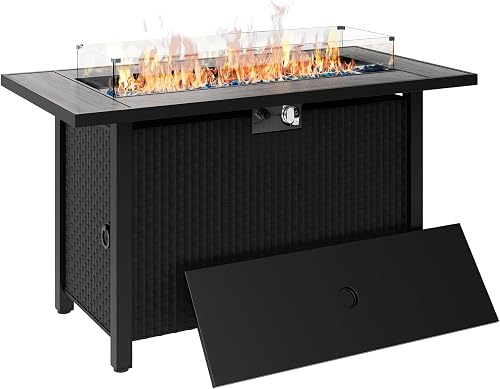
A propane fire table puts a burner into a table form. The Shintenchi 45-Inch Propane Table includes a lid for tabletop use and a glass wind guard, but you supply the propane tank.
Not every fire table uses gas. The Panovue 32-Inch Square Fire Table burns wood and has a square frame around a moveable bowl, so it combines a table shape with tending and cleanup associated with wood fires.
Which one fits your patio layout?
Choose by the full area the setup needs, including chairs and walking room. A product’s width or diameter is only the starting point.
The Amazon Basics pit measures 27.4 inches in diameter and 25.6 inches high. The Shintenchi table is 45 inches wide, 22 inches deep and 24.5 inches high, so its top takes up more space.
The Panovue measures 32 by 32 inches and stands 14 inches high. Its lower square form may fit a seating plan with a central surface, but check chair height and reach before settling on it.
Mark the product footprint on your patio with tape. Add chair positions and the paths people will use, then consult the model’s instructions for clearances from buildings, furniture and overhead structures.
If the space is tight, use the fire pit size guide to compare bowl dimensions with your seating plan. A patio that fits a fire feature on paper can still feel crowded once people are seated.
Does a round pit or square table work better?
A round pit gives the fire an even viewing angle, while a square table can line up neatly with rectangular furniture. Neither shape automatically uses less space.
A round bowl may suit chairs placed all around it. A square table can work with a sofa or straight-edged patio, but its corners may interrupt a narrow walking route.
Think about how people will move through the space, not only how many chairs fit. Keep access to doors and steps clear, and include the footprint of the fire feature in your measurements.
Which fuel suits how you want to use it?
Choose wood if you want a traditional fire and are willing to tend it; choose propane if you prefer starting a flame with a control. Fuel affects what you carry, store, clean and manage during a gathering.
Wood requires fuel, attention while it burns and ash handling after it cools. Smoke can also bother guests or neighbors depending on wind and how the fire is built.
Propane avoids carrying firewood and leaves no wood ash from burning logs. You still need a compatible tank, a safe place for it and the setup steps in the product instructions.
The Shintenchi model is a 50,000 BTU propane fire table with CSA certification. Its tank is not included, so plan for that separately and follow the instructions for connecting and operating the unit.
For a wider look at fuel styles, see our guide to outdoor fire pits. If propane suits your routine, the propane fire pit BTU guide explains how to compare burner output.
Is gas simpler than wood?
Propane can simplify a short evening because it avoids building and maintaining a wood fire. It still requires tank setup and careful operation as directed.
Wood may suit a longer gathering when tending the fire is part of the evening. Keep fuel dry and within reach without blocking walkways, and plan where cooled ash will go.
If smoke is a concern, compare the tradeoffs in our guide to smokeless versus regular fire pits. A different fuel or design may better fit a patio near neighbors.
Can a fire table double as a table?
Some fire tables include a cover that makes the top usable when the burner is off. Check what comes with the model, and use the cover only as directed.
The Shintenchi table comes with a lid for drinks or food when the flame is off. Remove the lid before lighting, and never place items on a hot or operating burner area.
The Panovue has a wood-burning bowl set into a square table frame. Its described uses include a BBQ grate and an ice bucket, but the BBQ grate is not included.
A traditional fire pit is less suited to this dual role. A mesh screen helps control stray sparks, but it is not a tabletop, and the bowl needs to stay clear while the fire is burning.
Consider where the lid goes during use. If you have no convenient place to set it, the table function may be awkward during a gathering.
Who should choose a fire pit, and who should skip one?
Choose a wood fire pit if you enjoy an open fire and can manage fuel, smoke and ash. Skip that style if you want a flame you can start without arranging wood or if ash cleanup does not suit your routine.
The Amazon Basics model is a straightforward fit for buyers who want a round wood-burning bowl and viewing from all sides. It has a spark screen and poker, but no tabletop surface.
A wood-burning table can suit people who want a square frame around the fire and a lower profile. The Panovue still needs wood and ash care, and its extra described cooking use depends on a separate BBQ grate.
Choose a propane fire table if you value a controlled flame and a surface that can be covered when off. Skip a large table if your patio is narrow or if you do not want to manage a propane tank.
The Shintenchi is the clearest match here for that combination. Its lid and wind guard add useful functions, but the 45-inch width calls for a roomy seating area.
How should you set up and care for either style?
Set the fire feature on a suitable surface with the clearances its instructions require, then keep the area around it open. Measure first, and account for wind, nearby materials and the route people will walk.
Assemble the unit on a level area and check that all required parts are present before its first use. Keep children and pets away from the setup area while assembling and operating it.
For wood models, use appropriate firewood and keep the spark screen available as directed. Let the fire and ashes cool fully before cleaning; use the poker to manage logs without reaching over the flame.
For propane, follow the connection and ignition steps for the specific table. Keep the tank in its required position and do not improvise a storage or connection arrangement.
The Panovue’s moveable bowl allows drainage and cleaning while keeping most ash and debris inside the pit. The Shintenchi includes a waterproof cover for storage, but let the table cool and follow its care instructions before covering it.
Our guides to putting out a fire pit safely and cleaning a fire pit and handling ash cover the end-of-evening routine. Useful tools can make upkeep easier, so see which fire pit accessories are worth buying for the setup you choose.
What mistakes should you avoid?
The most common mistake is choosing by appearance before checking fuel, footprint and daily upkeep. A style that looks right can be inconvenient if it crowds chairs or asks more maintenance than you want.
Avoid treating the table dimensions as the full seating footprint. Chairs, walking paths and the clearances required by the instructions all take additional room.
Don’t assume that every fire table is propane or that every top works as a regular table. Check the fuel and what cover or lid is included, and only use the surface in the way the product allows.
Avoid assuming a spark screen removes every fire risk. Keep the fire attended as directed, account for wind and local rules, and never leave a burning fire unattended.
Finally, don’t overlook storage. A wood pit needs a plan for fuel and ash, while a propane table needs a plan for the tank and any lid or cover when it is in use.
Which fire pit vs fire table choice makes sense?
Pick the Amazon Basics for a simple round wood fire, the Shintenchi for a propane table with a lid, or the Panovue for a square wood-burning table. Match the footprint and upkeep to how your patio is used.
The Amazon Basics 27-Inch Lattice fits buyers who want a round bowl, wood fuel and views from all sides. Its spark screen and poker are included.
The Shintenchi 45-Inch Propane Table fits a larger patio where a usable covered top matters as much as the flame. It includes a lid, glass wind guard and storage cover, but you’ll need to provide the propane tank.
The Panovue 32-Inch Square Fire Table suits buyers who want a low wood-burning form with a framed tabletop. It includes a mesh lid, poker and wood grate; the BBQ grate is not included.
For a fire pit vs fire table decision, choose the simplest setup that matches your seating area and how you want to manage the flame. Compare the best gas fire pits for patios for more propane options, or read fire pit vs fire ring if you’re deciding on an open fire layout.
Frequently asked questions
Is a fire pit or fire table better for a patio?
A fire table suits a patio where you want a tabletop and a propane flame, while a wood fire pit suits a traditional open fire. Measure the space around chairs and walking paths, then choose the fuel and shape that fit how you plan to gather.
Can you use a fire table as a regular table?
Some fire tables include a lid that covers the burner area for tabletop use. The Shintenchi 45-Inch Propane Table includes a lid for drinks or food when the flame is off.
Remove it before lighting and follow the product's instructions.
Do fire pits need more cleanup than propane fire tables?
Wood-burning pits leave ash and require you to manage firewood, while propane tables avoid wood ash. Both need care: let everything cool, follow the product's instructions, and keep the burner or bowl clear of debris.
How much space should you leave around a fire pit or table?
Use the clearances in the exact model's instructions and follow local fire rules. The product dimensions don't include space for chairs, walls, overhangs or walking paths, so measure the full setup before choosing a location.
Can a wood fire pit sit on a patio?
A wood fire pit may be used on a patio only when its instructions and local rules allow that surface and setup. Check heat protection, clearance, wind exposure and spark control before lighting, and keep it away from combustible materials.


