Outdoor Fire Pits: A Plain Guide to Steel, Smokeless and Gas
The right outdoor fire pit depends on your fuel preference, smoke tolerance, space and upkeep. Choose wood for a traditional fire, a smokeless-style design to help reduce smoke, or gas for controlled ignition without logs.
On this page (7 sections)
- Which outdoor fire pit type fits your routine?
- How do steel, smokeless and gas designs differ?
- How do you choose the right size and placement?
- What should you burn in a wood fire pit?
- What care does each type need?
- What safety checks matter before lighting a fire?
- Which outdoor fire pit should you choose?
The right outdoor fire pit depends on what you want to burn, how much smoke and ash you can manage, and how much room you have. Wood offers a traditional flame, smokeless-style designs aim to reduce smoke, and gas models start without kindling or logs.
A “steel” pit describes a material, while “smokeless” describes an airflow goal. A wood-burning pit can be both steel and smokeless-style, so compare the actual fuel, construction and care needs instead of relying on one label.
Begin with the way you plan to use the fire: quiet evenings for a few people, larger gatherings, occasional cooking, or a flame that can be switched on and off. Then measure the site and decide how much setup and cleanup fits your routine.
Which outdoor fire pit type fits your routine?
Choose a wood-burning model for a log fire, a smokeless-style pit if reducing smoke is a priority, or a gas model for convenient flame control. The best match is the one whose fuel and cleanup you will use comfortably.
| Type | Fuel and starting | What to plan for | A fit if you want |
|---|---|---|---|
| Steel wood-burning pit | Firewood; light kindling and tend the fire | Smoke, ash, sparks and dry wood storage | A familiar wood fire |
| Smokeless-style wood pit | Firewood; light and let the fire establish | Some smoke may remain; ash still needs handling | A wood fire designed to reduce smoke |
| Gas fire pit or table | Often propane; ignite with controls | Fuel supply, safe connection and model clearances | Flame control without handling logs |
“Steel” does not tell you how much smoke a fire pit produces. A simple open bowl behaves differently from a design that directs air through the fire.
For wood designs, compare the choices in our steel wood-burning fire pits guide. If smoke is your main concern, our smokeless vs regular fire pit comparison explains what airflow designs can and cannot change.
How do steel, smokeless and gas designs differ?
The main differences are the material, the airflow design and the fuel. Steel is a material choice, smokeless is a design goal, and gas is a fuel choice.
What does steel mean for an outdoor fire pit?
Steel can form a simple bowl or a more involved fire pit with a grate, screen or airflow features. The word alone does not tell you the thickness, finish, drainage design or care requirements.
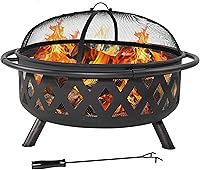
The Sunnydaze Crossweave is a wood-burning alloy steel pit with a spark screen, poker and cover. Its bowl has no drainage holes, so rainwater needs to be emptied and the pit covered between uses.
For a broader material comparison, see our guide to steel, cast iron, stainless steel and Corten fire pits. If you are comparing steel models for longevity, our heavy-duty fire pit guide covers the construction details to inspect.
How does a smokeless wood fire pit work?
A smokeless-style pit uses airflow features to help reduce smoke as the fire burns. It can still smoke, especially while starting or when the wood is damp.
Use dry firewood that suits the pit, leave the air paths clear, and allow the fire to establish before judging its smoke. Smoke reduction is a design aim, not a promise that every fire will be smoke-free.
The Tiki Patio 25-Inch Smokeless uses internal airflow and burns natural cut firewood or TIKI Wood Packs. Its removable ash pan makes cleanup simpler once the fire is completely cool.
See our guide to reducing fire pit smoke for fuel and fire-management steps. If smoke avoidance matters more than having a wood flame, compare gas options as well.
What changes when you choose a gas fire pit?
A gas fire pit starts and adjusts through its controls, so you skip kindling and log tending. You trade ash and wood storage for a fuel supply, connection checks and model-specific operating rules.
A propane model needs a compatible tank and a safe arrangement for the tank and hose. Read the manual before setup, and keep the clearances it specifies around the burner and fuel supply.
The Shintenchi 45-Inch Propane Table uses liquefied petroleum gas. It comes with a lid, glass wind guard, glass stones and waterproof cover; the propane tank is not included.
A fire table can be a better fit than an open bowl if you want a defined surface for drinks when the fire is off. For help comparing gas output and fuel, read our propane fire pit BTU guide.
How do you choose the right size and placement?
Choose a pit that fits the gathering area and leaves room to sit, walk and maintain safe clearance. Measure the entire setup, including seating and paths, before you shop.
A listed diameter may describe the bowl, outside rim or table. Those measurements affect how much floor space the fire pit uses, so compare outside dimensions and account for any screen or surrounding ledge.
The Tiki measures 24.75 inches across and 18.75 inches high. The Sunnydaze has a 36-inch outer ring, and the Shintenchi table is 45 inches wide.
A larger fire pit can bring more people around the fire, but it also takes more room and may be harder to position safely. A compact model may suit a small patio, but only if chairs and walkways still fit.
Use our fire pit size guide to measure a patio or yard. For a small space, see fire pits for small patios, and check the model instructions before placing any pit on grass or a deck.
What size fire pit suits the way you gather?
For two or three people, start with the footprint that leaves comfortable space for chairs and movement. A compact fire pit can work well for occasional evenings, while a broad bowl makes more sense when several people regularly gather around it.
The Sunnydaze is described for groups of 6 to 8, with a 36-inch outer ring and a bowl that is 31 inches across. Its larger footprint may be excessive for a narrow patio or a household that rarely hosts groups.
The Tiki’s 25-inch gathering size is aimed at 4 to 6 people. Its 4-foot heat radius is a planning reference, not a substitute for the maker’s clearance and placement instructions.
The Shintenchi’s 45-inch width includes the table surface, so it should be planned like patio furniture as well as a fire feature. Measure doorways and storage areas too if you expect to move or put it away.
What should you burn in a wood fire pit?
Burn only fuel the fire pit is designed to use, and follow local rules for outdoor burning. Dry, suitable firewood is a better starting point than damp scraps or household waste.
Wet wood can create more smoke and make it harder to keep the fire steady. Do not assume a pit is made for charcoal, pellets or treated lumber unless the maker specifies those fuels.
The Tiki supports natural cut firewood or TIKI Wood Packs. The Breeo X Series 24 Corten is a wood-burning Corten steel pit with X Airflow features intended to feed oxygen to the fire and help minimize smoke.
The Breeo is compatible with Breeo live-fire cooking accessories. Check accessory and fire pit instructions before cooking over a fire, and choose a model intended for that use.
Our guide to what you can burn in a fire pit covers fuel choices. For model details, read the Breeo X Series 24 review.
Should you choose wood packs or regular firewood?
Choose the fuel that matches the pit and the kind of setup you prefer. TIKI Wood Packs are an option for the Tiki, while natural cut firewood gives you a conventional log fire.
Either way, store fuel so it stays dry and use pieces sized for the fire pit. Oversized logs can be awkward to arrange and may make it harder to control a small fire.
Do not burn household rubbish, painted or treated wood, or materials that the maker does not approve. Besides creating unwanted smoke, unsuitable fuel can leave residue or make the fire harder to manage.
What care does each type need?
Wood pits need ash removal and weather protection; gas models need fuel-system care. Wait until the fire and ashes are fully cool before cleaning or covering a wood pit.
Empty ash into a suitable metal container and follow local disposal guidance. Keep it away from combustible materials until you are certain there are no live embers.
Covers help keep rain and debris off a fire pit between uses, but only cover a fully cool unit and follow its instructions. The Sunnydaze bowl has no drainage holes, which makes removing rainwater especially important.
The Tiki includes a removable ash pan, stand and weather-resistant cover. These features simplify routine cleanup and storage, but they do not remove the need to let the fire cool first.
A gas pit does not leave wood ash, but its burner, fuel connection and fire media need the care described in the manual. Stop using it if a connection appears damaged or the flame acts unexpectedly.
Read how to clean a fire pit and handle ashes for a careful cleanup routine. If your pit will stay outdoors, how to slow fire pit rust covers practical protection steps.
What setup mistakes shorten a fire pit’s useful life?
Leaving a metal pit uncovered in standing water can speed up wear. Empty water from the bowl, let it dry, and use the included cover or another suitable cover after the pit is cool.
Putting a fire pit away while it is still warm can damage a cover or create a fire risk. Let the fire die out and the unit cool fully before covering, cleaning or storing it.
Another common mistake is assuming a cover makes a fire pit weatherproof. A cover helps limit exposure, but regular checks for trapped moisture, debris and rust still matter.
What safety checks matter before lighting a fire?
Check local rules, the manufacturer’s instructions and conditions around the pit before every fire. Choose stable, fire-safe ground with clear space around and above the flame.
Keep the pit away from buildings, fences, dry leaves and low branches. Use a spark screen where supplied, and keep children and pets at a safe distance.
Wind can carry smoke and embers, so wait for calmer conditions when the fire would be hard to control. Keep water or an appropriate extinguisher nearby, and never leave a fire unattended.
A deck or porch needs extra care because heat and embers can damage surfaces. Use a pit there only when its instructions allow it, and use the required protective base and clearances.
Rules vary by location and can change with weather or fire restrictions. Check your local fire department and read whether a backyard fire pit needs a permit before installing or lighting one.
Can a fire pit go on grass or a deck?
Use only a surface allowed by the fire pit’s instructions. Grass can scorch, and a deck can be damaged by heat or stray embers, so a fire-safe base and adequate clearance may be needed.
Do not assume the legs or stand alone protect the surface. Check the manual for approved surfaces and any required pad, then confirm that the setup stays level and away from combustible materials.
For more placement guidance, see whether you can put a fire pit on grass. If the location is close to a home or shared boundary, check local rules before lighting.
Which outdoor fire pit should you choose?
Choose the Sunnydaze Crossweave if you regularly gather a group around a wood fire and have room for its wide footprint. Skip it if you want a compact pit, a clean flame area, or a model without routine ash and water management.
Choose the Tiki Patio if you want a smaller wood-burning centerpiece with airflow designed to reduce smoke, an ash pan and a cover. Skip it if you expect a smoke-free fire or want to avoid wood fuel and ash altogether.
Choose the Breeo X Series 24 Corten if you want a wood-burning, smokeless-style design with cooking accessory compatibility. Skip it if you want the lowest-effort setup or do not want a heavy, fixed-feeling fire pit.
Choose the Shintenchi 45-Inch Propane Table if a patio table and controllable gas flame suit your space. Skip it if you want a wood fire, do not have a safe tank setup, or cannot accommodate its broad table footprint.
Before buying, confirm the actual outside dimensions, fuel type, included parts, clearances and care steps. For your next comparison, browse our fire pit buying help, then use the focused guides to wood-burning pits, smokeless pits and gas fire pits.
Frequently asked questions
What type of outdoor fire pit is easiest to use?
A gas fire pit starts with its controls, without gathering kindling or managing logs. You still need the right fuel supply, safe placement and the operating steps for that model.
Do smokeless fire pits produce no smoke?
No wood fire is guaranteed to be smoke-free. Smokeless designs use airflow features to help reduce smoke, but damp wood, restricted airflow or a fire that has not warmed up can still produce smoke.
Is steel a good material for an outdoor fire pit?
Steel can make a practical outdoor fire pit, but care depends on the steel, finish and exposure to water. Cover it between uses, keep it dry when possible and follow the maker's care instructions.
Can I put an outdoor fire pit on a deck?
Use a fire pit on a deck only if its instructions allow that placement and you can protect the surface from heat and sparks. Keep it clear of structures and branches, and check local fire rules before lighting it.
How large should my outdoor fire pit be?
Choose a size that leaves room for seating, safe clearance and access around the fire. Measure the area first, then compare the pit's outside dimensions rather than relying only on its bowl diameter.