Heavy-Duty Fire Pits: What to Check Before You Buy
A heavy duty fire pit should fit your firewood, gathering space and care routine. Compare the bowl, material, base, spark control and weather protection before choosing.
On this page (8 sections)
- What should you check on a heavy duty fire pit?
- Which fire pit materials suit regular use?
- How large should the bowl be?
- Which features help you tend a fire?
- How should you compare these heavy-duty fire pits?
- How can you protect the surface below a fire pit?
- What routine helps a fire pit last?
- Which heavy duty fire pit should you choose?
A heavy duty fire pit should fit your firewood, gathering space and care routine. Check its material, bowl size, base, spark screen and rain protection before you choose.
“Heavy duty” can mean different things from one fire pit to another. Compare the actual construction and dimensions, then consider where you will use the pit and whether you need to move or store it.
Our fire pit materials guide explains the trade-offs among steel, cast iron, stainless steel and Corten steel. The four wood-burning options below show how bowl shape, size and included features can change the buying decision.
What should you check on a heavy duty fire pit?
Start with material, bowl dimensions, stability and care instructions. These determine what fits in the bowl, where the pit can go and how much upkeep it needs.
A heavy-duty label does not describe a standard construction. Compare the named material and weight, and check how the legs or base support the bowl.
| Check | What to look for | Why it matters |
|---|---|---|
| Material | Steel, cast iron or another named material | Materials and finishes have different care needs |
| Bowl size | Diameter, depth and shape | Helps you judge room for logs and ash |
| Stability | Leg count, base shape and ground contact | Helps you assess whether the pit suits its location |
| Heat protection | Recommended surface and ground clearance | Helps protect the area below the bowl |
| Fire control | Spark screen, grate and poker, if included | Helps with tending the fire and managing embers |
| Weather care | Cover, drainage and storage guidance | Shows how to handle rain, ash and off-season storage |
| Portability | Weight and handles or rails | Affects whether you can move the pit after it cools |
Read the fire pit size guide before buying a wide model. The full outside dimensions can be much larger than the bowl, and both matter when placing chairs and leaving room to walk.
What makes a heavy duty fire pit sturdy?
A sturdy fire pit has a base and bowl suited to its size and intended placement. Look at the number and angle of the legs, how the bowl sits, and whether handles or a surrounding rail affect how you can move it.
Weight is one clue, not a complete measure of sturdiness. A heavier bowl may feel substantial, but the shape, supports and intended surface matter too.
Which fire pit materials suit regular use?
Steel and cast iron both need care, but their weight and finishes differ. Check the model’s specific material and care guidance instead of assuming that every pit made from the same broad material behaves alike.
The Sunnydaze Cosmic and Crossweave are painted steel models. Their care guidance calls for clearing cooled ash, emptying pooled water and covering the pit between uses.
The Sunnydaze 30-Inch Cast Iron Bowl has an oxidized finish that can change color with exposure to water and oxygen. Sunnydaze advises keeping it covered and storing it dry.
No material is maintenance-free. See how to slow fire pit rust for practical care steps, and compare cast iron and steel fire pits if those are your main options.
A finish is part of the care decision, not a reason to ignore storage. If a pit will stay outside, plan where its cover will go and how you will empty water after rain.
How large should the bowl be?
Choose a bowl that fits the logs you plan to burn while leaving enough room around the pit. Check its depth and full outside width, not just the size suggested by its name.
The Cosmic has a 34 in bowl that is 10 in deep, with a 41.5 in outer ring. Its depth accommodates full-size logs, but the wide footprint needs a generous seating area.
The Crossweave has a 31 in bowl with an 11 in depth and a 36 in outer ring. It is narrower than the Cosmic, while its bowl is deeper.
The cast iron model has a 30 in diameter bowl and stands 15 in high. The Northland is rectangular, at 36 in wide by 27 in deep, so it fits a different kind of layout.
Compare the bowl to your usual firewood, then measure the entire pit and seating area. For more on fuel choice, read what you can burn in a fire pit.
Which heavy duty fire pit size fits your space?
For a compact seating area, judge the model by its outside footprint and the space needed for safe movement, not only by the bowl diameter. A larger bowl can hold longer logs, but it also needs more room around it.
Sketch the pit’s footprint on the patio or yard before ordering. Include the chairs, the path people will use to reach them and any nearby structures that affect placement.
Which features help you tend a fire?
A grate, spark screen and poker each serve a different purpose. Check what comes with the pit and whether the features match the way you plan to build and manage a fire.
A built-in log grate can let air move below the fire. Both the Cosmic and Crossweave have a log grate and 360-degree cutouts; the Northland includes a cooking grate.
A mesh spark screen can help catch flying embers, but it does not replace supervision or safe placement. The Cosmic, Crossweave and Northland include screens and pokers for tending the fire and lifting the screen.
The cast iron bowl has built-in side handles for repositioning, but those handles get hot during use. Move the bowl only after the fire is out and the pit has cooled fully.
For setup and flame basics, see how to start a fire in a fire pit. If smoke is your main concern, our guide to reducing fire pit smoke covers fuel and airflow choices.
How should you compare these heavy-duty fire pits?
Match each pit’s shape, features and care needs to your space and routine. These options cover larger round bowls, cast iron construction and a rectangular model with a cooking grate.
Sunnydaze Crossweave: heavy duty fire pit for a covered patio
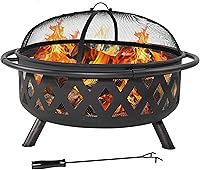
The Crossweave suits a buyer who wants a round steel pit with a deeper bowl and an included cover. Its bowl is 31 in across and 11 in deep, inside a 36 in outer ring.
The Crossweave uses 24-gauge steel. Mesh-covered crossweave cutouts and the built-in grate allow air to reach the fire from below, while the spark screen is designed to catch flying embers.
The bowl has no drainage holes, so empty rainwater instead of leaving it standing. Cover the pit between uses and store it in a dry, covered location.
Choose it if the 36 in outer ring fits your seating space and you want the cover included. At 23.8 lb, it is also the lightest of these four options, which may suit someone who plans to move a cooled pit around the yard.
Skip it if you need a cooking grate or a bowl built from cast iron. It is a wood-burning fire pit for people who want a round steel bowl and simple storage provisions.
Sunnydaze Cosmic: heavy duty fire pit for full-size logs
The Cosmic suits a buyer who wants a large round steel bowl with a wide outer ring. Its bowl is 34 in across and 10 in deep, and the whole pit measures 41.5 in across.
The bowl sits 5.5 in above the ground, and its high-temperature painted steel construction has star and moon cutouts. The wide safety ring creates a broad boundary around the bowl, so include it in your layout measurements.
Place it outdoors on stone, brick, gravel or a fire-safe pad. Empty pooled rainwater, use the included cover between fires and store the pit in a dry, covered place during the off-season.
Choose it if you have room for its broad footprint and want a deep bowl for full-size logs. At 28.4 lb, it may suit someone who wants a large centerpiece that can still be moved by two people.
Skip it for a tight patio where the outer ring would crowd chairs or walkways. Its included screen, grate and poker make it a better fit for tending wood fires than for cooking.
Sunnydaze Cast Iron Bowl: heavy duty fire pit with a low profile
The cast iron bowl suits a buyer who wants a heavier, lower-profile round pit. It has a 30 in diameter bowl, a 6 in depth and a total height of 15 in.
Three 10 in slanted legs form the base, and built-in handles help with repositioning when the pit is cold. The oxidized finish can change color as it is exposed to water and oxygen.
There is no cover included, and the bowl has no drainage holes. Remove ash after the fire, let the bowl cool, empty rainwater and store it dry to help limit rust.
Choose it if cast iron’s substantial feel and rustic finish suit your space. A compatible cooking grate can be added, but do not cook directly on the oxidized bowl.
Skip it if you want a cover in the box, need a taller bowl or expect to leave the pit exposed to rain. This is the pick for buyers who will handle the added care and want cast iron’s distinct look.
Sunnydaze Northland: heavy duty fire pit for backyard cooking
The Northland suits a buyer who wants a rectangular wood-burning fire pit with a cooking grate. Its outside dimensions are 36 in wide, 27 in deep and 25 in high.
The hinged door in the mesh screen gives access to burning logs and the grill grate. A tubular metal rail encircles the brazier, and a weather-resistant cover is included.
The black steel pit has a high-temperature paint finish. Its 27.4 lb weight and rectangular shape may suit some layouts better than a round bowl.
Choose it if you expect to use the 19.5 by 11.75 in cooking grate and prefer a rectangular footprint. Check the cooking area against the food and tools you plan to use.
Skip it if you mainly want a large, deep round bowl for long logs. Its cooking surface is the deciding feature, so don’t choose it just because it comes with several accessories.
How can you protect the surface below a fire pit?
Place a fire pit on a surface recommended for that model, and check local fire rules before lighting it. A spark screen does not protect the ground beneath the bowl from heat.
The Cosmic guidance names stone, brick, gravel or a fire-safe pad as placement options. The Crossweave guidance names those surfaces to shield decks, patios and porches from heat.
Leave enough room around the pit for people, chairs and nearby structures. Keep it away from overhanging branches and anything that could catch fire, and supervise the fire while it is burning.
If you are considering grass, read whether a fire pit can go on grass before setting it up. Follow local restrictions and the instructions supplied with the pit.
How do you set up a heavy duty fire pit?
Set the pit on the recommended surface, assemble its legs and rim as directed, and check that the bowl sits level before lighting it. Keep the screen, poker and other included parts nearby so you can tend the fire without improvising.
The Cosmic requires attaching the legs and outer rim. The Crossweave assembly includes attaching its legs and outer rim, then placing the fitted screen; the cast iron bowl requires attaching three legs and side handles.
Set up the Northland with its rectangular footprint and cooking grate in mind. Keep the area around the pit clear, and make sure you can lift the screen and access the fire without reaching across hot surfaces.
What routine helps a fire pit last?
Let the fire pit cool, clear the ash and keep water from sitting in the bowl. Cover or store it according to its care guidance, especially when it will sit unused.
Wait until the pit is fully cool before cleaning. Empty pooled rainwater from bowls without drainage holes, then let the metal dry before covering it.
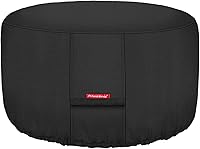
A cover can reduce direct rain exposure, but check whether one is included. The cast iron bowl does not come with a cover; the Cosmic, Crossweave and Northland include one.
For a longer care routine, see how to clean a fire pit and handle the ashes. Regular cleaning also gives you a chance to spot finish changes or damage before the next fire.
What mistakes should you avoid with a heavy duty fire pit?
The most common buying mistake is choosing by the bowl size alone. The outside ring, legs and overall footprint also take space, and the full pit must fit the surface and seating arrangement.
Another mistake is assuming a spark screen makes placement safe. It helps manage flying embers, but you still need a suitable surface, clear space and supervision.
Don’t leave ash or rainwater in a bowl between fires. Don’t move a pit by its handles while it is hot, and don’t cook directly on the cast iron bowl’s oxidized surface.
Which heavy duty fire pit should you choose?
Pick the pit whose material, bowl and footprint suit your space and upkeep habits. Choose the Crossweave for a deeper round bowl with a cover, the Cosmic for a broad bowl that fits full-size logs, the cast iron model for a low-profile cast iron look, or the Northland for a rectangular pit with a cooking grate.
Measure the entire footprint, confirm a suitable surface and decide how you will handle rainwater and ash. If you want more options for wood fires, compare our best wood-burning fire pits.
Frequently asked questions
What makes a fire pit heavy duty?
A heavy-duty fire pit uses materials and a base suited to its intended fires, with features that fit your space and routine. Check the material, bowl dimensions, weight, leg design, spark control and care needs before you buy.
Is a heavier fire pit always better?
No. A heavier pit may feel more substantial, but it can be harder to move.
Compare its material, construction, size and care needs, then decide whether you need to carry it between locations or keep it in one place.
Can a steel fire pit stay outside in the rain?
Rain can affect steel and cast iron over time. Follow the care guidance: clear cooled ash, empty pooled water and cover or store the pit when it is not in use.
A painted or oxidized finish still needs basic care.
What size heavy-duty fire pit should I buy?
Choose a bowl that fits your usual firewood and gathering space. Then check the full outside dimensions and height, since a larger bowl needs more room and a suitable surface.
Measure for chairs, walking space and nearby structures before you settle on a size.
Does a spark screen make a fire pit safe?
A spark screen can help catch flying embers, but it does not remove fire risk. Use a suitable surface, follow local rules, supervise the fire and have a way to extinguish it.
Read our guide on putting out a fire pit safely.